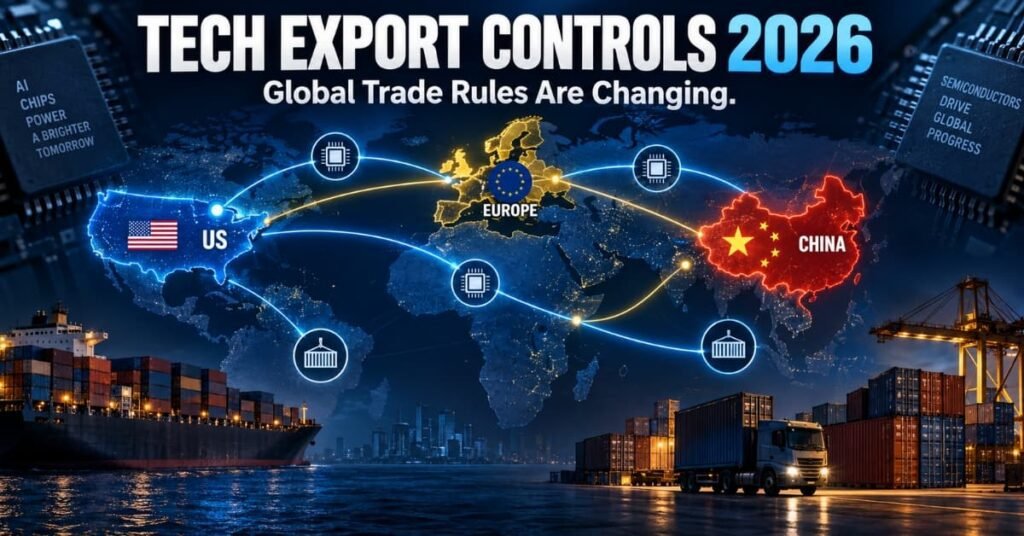
Global trade rules are shifting faster than most companies can keep up with. Over the past year, governments around the world have tightened rules on what technology can cross borders, who can buy it, and how it can be used once it gets there. At the center of this shift are the new tech export controls 2026 policies that are reshaping everything from AI chip manufacturing to rare earth mineral supply chains.
If you have been following tech news lately, you have probably noticed a pattern: chip shortages, sudden trade restrictions, and companies scrambling to redesign their supply chains almost overnight. None of this is random. It is the direct result of a coordinated (and sometimes chaotic) push by major economies to control who has access to the technologies that power artificial intelligence, defense systems, and advanced computing.
This article breaks down what is actually happening, why it matters, and what it means for businesses, developers, and everyday consumers who rely on the devices and software these rules affect.
What Are Tech Export Controls in 2026?
Export controls are government regulations that restrict which goods, technologies, and services can be sold, shipped, or transferred to other countries, companies, or individuals. They are not new — countries have controlled the export of sensitive technology for decades, especially anything with military or dual-use applications. What has changed is the scope and intensity of these rules.
The current wave of tech export controls 2026 policies goes far beyond traditional defense technology. It now covers advanced semiconductors, AI training hardware, cloud computing access, and even the raw materials used to manufacture chips. The United States, through its Bureau of Industry and Security, has expanded its list of restricted technologies to include high-performance GPUs, AI model weights above certain computing thresholds, and specialized manufacturing equipment used to produce cutting-edge chips.
China, in turn, has responded with its own restrictions on rare earth elements and critical minerals — materials that are essential for everything from smartphones to electric vehicles to military hardware. This back-and-forth has turned what used to be a quiet regulatory niche into one of the most closely watched storylines in global business.
Why 2026 Is a Turning Point
Several factors have converged to make this year different from previous rounds of trade tension. First, the AI race has made advanced chips more strategically valuable than almost any other commodity. Governments now view GPU access the way they once viewed oil reserves — as a resource that determines economic and military competitiveness for decades to come.
Second, the rules themselves have become far more detailed and harder to navigate. Companies are no longer just checking a simple restricted list. They now have to evaluate ownership structures, end-use certifications, and even the nationality of employees who might have access to controlled technology. A single rule violation, even an unintentional one, can result in massive fines or a complete loss of export privileges.
Third, and perhaps most importantly, other countries are no longer sitting on the sidelines. The European Union has introduced its own dual-use reform, tightening oversight on technology transfers within its member states. Allied nations are being asked to align their domestic policies with US restrictions, creating a patchwork of rules that businesses must track simultaneously across multiple jurisdictions.
There is also a growing enforcement gap that regulators are trying to close. In previous years, many companies treated export compliance as a paperwork exercise handled quietly in the background. That is no longer realistic. Enforcement agencies have expanded their investigative capacity, added more staff dedicated to trade violations, and started sharing intelligence across borders more actively than before. A shipment flagged in one country can now trigger a review in another almost immediately, which means businesses operating internationally have far less room for error than they did just a few years ago.
Legal teams are also seeing an uptick in what compliance officers call “affiliate rule” complications, where restrictions extend not just to a company itself but to any entity it partially owns or is owned by. This closes a loophole that many businesses previously used to route sensitive technology through subsidiaries in less-regulated regions, but it also adds significant complexity for legitimate multinational operations trying to stay compliant while running normal cross-border business.
China’s Rare Earth Deadline: A Global Pressure Point
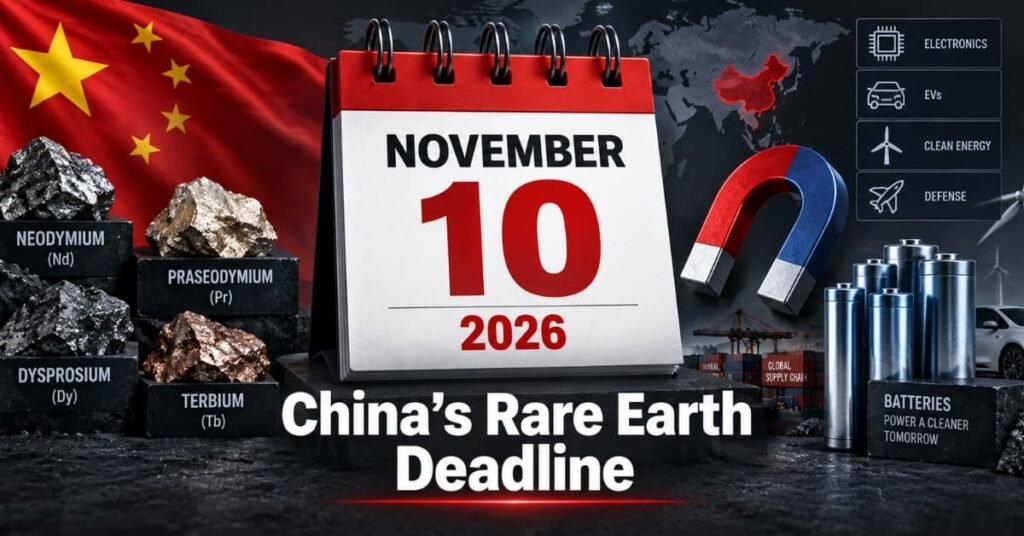
One of the most closely watched developments tied to tech export controls 2026 is China’s looming deadline on rare earth mineral restrictions. Extraterritorial provisions under China’s trade rules had been temporarily suspended, but that suspension is set to expire on November 10, 2026. If the suspension is not extended, foreign companies that use Chinese rare earth technology anywhere in their supply chain — even indirectly — could face strict new limitations.
This matters enormously because rare earth elements are used in magnets, batteries, semiconductors, and countless consumer electronics. A tightening of these rules could ripple through industries that have nothing to do with defense or advanced AI, including automakers, appliance manufacturers, and consumer electronics brands. Companies with global supply chains are racing to audit their sourcing and identify alternative suppliers before the deadline hits.
Analysts tracking the situation note that even a partial extension would only delay the inevitable pressure on global supply chains. Businesses that wait until the last moment to adapt are likely to face the steepest costs, both in terms of compliance and in securing alternative material sources.
AI Chips and Semiconductor Restrictions
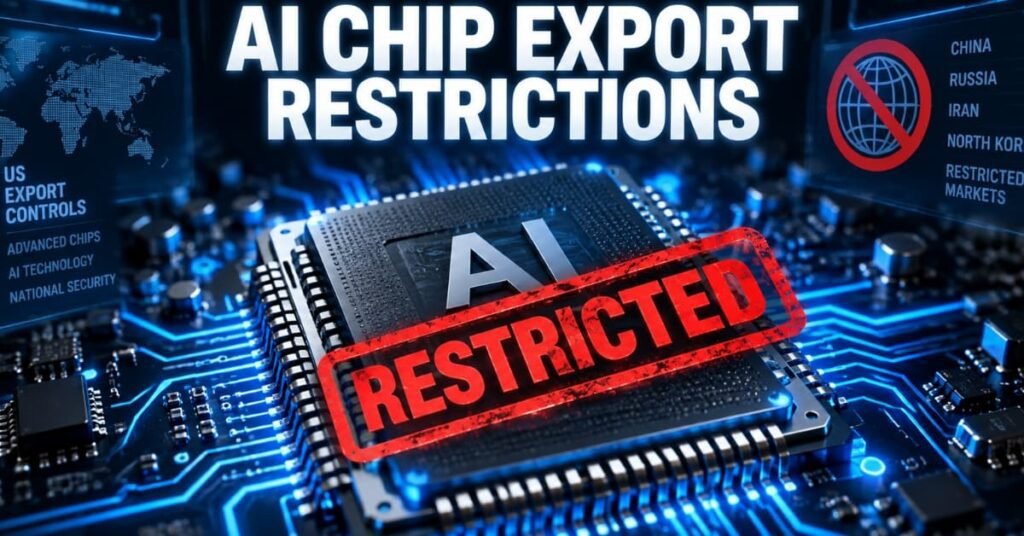
Perhaps the most talked-about piece of the current regulatory landscape involves semiconductors and AI hardware. High-end chips used to train large language models and power data centers are now subject to strict licensing requirements before they can be sold internationally. This has forced major chipmakers to redesign product lines specifically for markets with different regulatory thresholds, effectively creating separate versions of the same hardware depending on where it will be sold.
These restrictions have also affected the consumer side of the AI boom. Devices that rely on on-device AI processing, including smart home gadgets and voice-activated assistants, now have to account for which chips are legally exportable to which regions. If you are shopping for AI-enabled hardware and want to see which devices are staying ahead of these shifting regulations, our breakdown of the best AI smart speakers 2026 covers models that continue to perform well even as manufacturers adjust their hardware to meet new compliance requirements.
For developers and businesses building AI products, the practical effect is longer lead times, higher costs, and more complex vendor relationships. Companies can no longer assume that a chip available in one country will be available everywhere else. Sourcing decisions now require legal review alongside the usual technical and budget considerations.
How Businesses Are Adapting
Companies affected by these rules are not sitting still. Many are investing heavily in compliance teams and automated screening tools that can flag potential violations before a shipment or contract is finalized. According to trade compliance experts, AI-driven export control screening has become one of the fastest-growing areas of enterprise software, helping companies classify products, screen destinations, and assess risk in real time rather than relying on manual review.
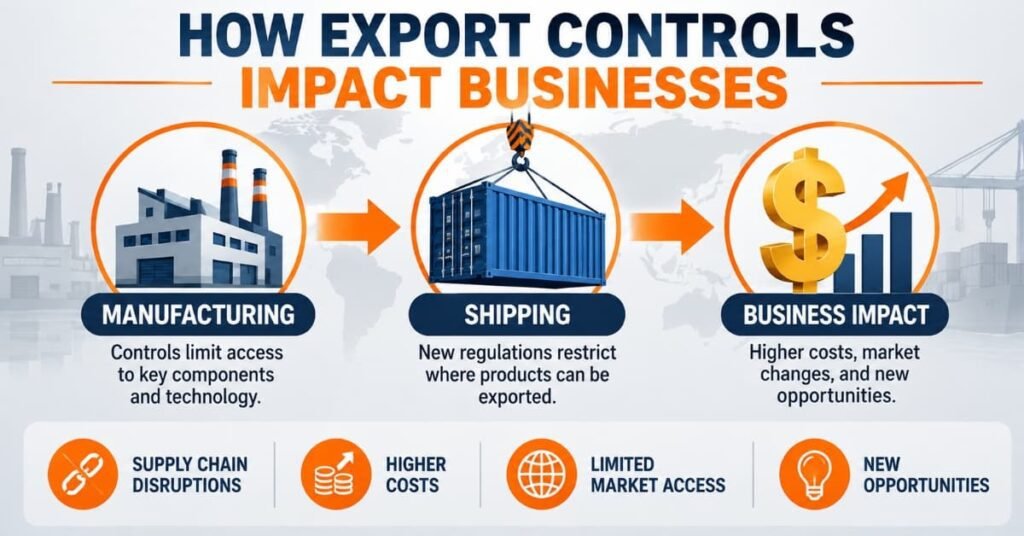
Diversification has also become a major theme. Businesses that once relied on a single supplier or region for critical components are now building redundant supply chains across multiple countries. This is expensive and slow, but it reduces the risk of a single regulatory change disrupting an entire product line.
Some companies are going a step further and restructuring their operations entirely, setting up separate manufacturing or R&D divisions in different jurisdictions to keep sensitive technology development isolated from regions facing the tightest restrictions. While costly, this approach gives multinational firms more flexibility to continue operating even as tech export controls 2026 rules continue to evolve throughout the year.
Impact on Everyday Consumers
While most of this conversation happens at the corporate and government level, everyday consumers are far from immune to the effects. Price increases on electronics, delayed product launches, and reduced availability of certain high-end devices in specific regions can all be traced back to export control complications somewhere in the supply chain.
Consumers may also notice that some AI features are rolled out unevenly across different countries. A voice assistant or smart device might support advanced AI capabilities in one region while offering a more limited version elsewhere, simply because the underlying chip or cloud service used to power that feature is subject to export restrictions in certain markets.
For anyone shopping for tech in 2026, it is worth paying attention to where a device’s core components are sourced and manufactured, especially for products in categories most affected by these rules, such as AI hardware, high-performance computing devices, and anything involving advanced chip manufacturing.
There is also a growing awareness gap between what consumers expect and what manufacturers can actually deliver. Marketing materials for new gadgets often promise the latest AI capabilities, but the fine print sometimes reveals that certain features are limited to specific regions due to hardware or software restrictions. Shoppers who want the full experience of a product may need to research regional availability more carefully than they would have just a few years ago, particularly for anything involving on-device AI processing or cloud-connected assistants.
Streaming services, gaming platforms, and even some software subscriptions tied to specialized computing infrastructure have also seen quiet adjustments in certain markets. While these changes rarely make headlines on their own, they add up to a noticeably different tech landscape depending on where in the world a consumer happens to be shopping.
Compliance Costs and Legal Risks
For companies operating across multiple markets, the financial burden of compliance has grown substantially. Building an internal compliance program now often requires dedicated legal counsel, specialized software licenses, and ongoing staff training to keep pace with rules that can change with little advance notice. Smaller companies without the resources for a full compliance department often turn to third-party consultants, which adds a recurring cost that many did not need to budget for in previous years.
The legal risks of getting it wrong are also more severe than many businesses realize. Penalties for violations can include significant fines, loss of export privileges, and in serious cases, criminal liability for executives who knowingly circumvent restrictions. Even unintentional violations, such as shipping a product to a distributor who then resells it to a restricted entity, can result in investigations that damage a company’s reputation and disrupt operations for months.
Insurance providers have started to take notice as well, with some now offering specialized trade compliance coverage designed to help companies manage the financial fallout of an unintentional violation. This emerging market for compliance-related insurance is itself a sign of just how seriously businesses are being forced to treat these regulations.
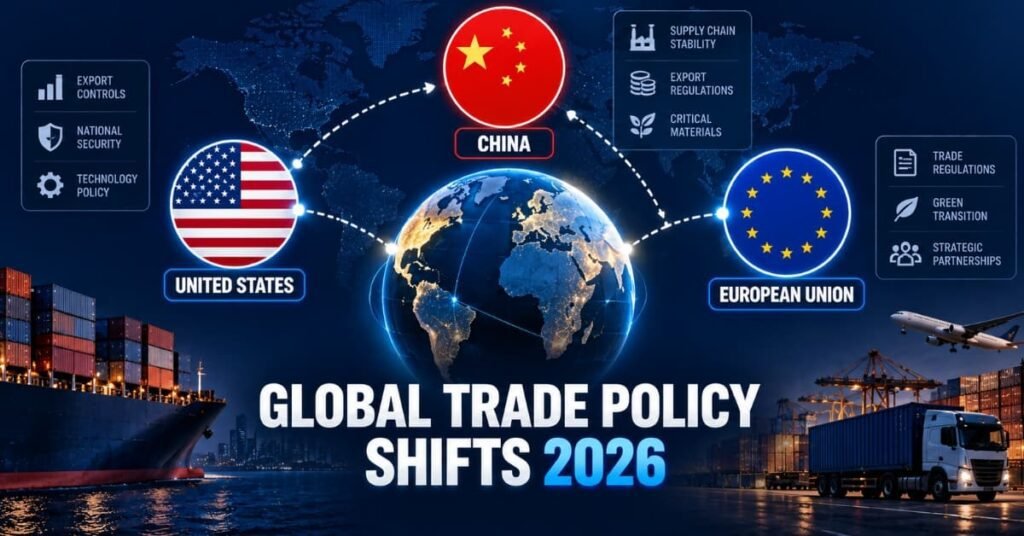
The Global Response: Allies, Rivals, and New Alliances
The ripple effects of tightening trade policy extend well beyond the countries directly involved. Allied nations are increasingly being pulled into alignment with stricter standards, sometimes voluntarily and sometimes under diplomatic pressure. Meanwhile, countries that are not directly targeted by these restrictions are positioning themselves as alternative manufacturing or trade hubs, hoping to capture business from companies looking to reduce their exposure to regulatory risk.
This dynamic has created a genuinely global reshuffling of technology supply chains. Countries with strong manufacturing infrastructure but fewer restrictions are seeing increased investment, while regions caught in the middle of trade disputes face uncertainty about long-term stability. Multinational companies are having to think several years ahead, not just about where to source materials today, but about which countries are likely to remain reliable trade partners as tech export controls 2026 policies continue to shift.
International organizations are also stepping in to help standardize how these rules are applied, though progress has been slow given how differently individual governments prioritize national security versus economic openness.
What This Means for the Future of AI Development
The broader implication of all this regulatory activity is that AI development is no longer just a technology race — it is a geopolitical one. Countries that can secure reliable access to advanced chips, rare earth materials, and skilled talent will have a significant advantage in building the next generation of AI systems. Those that cannot may find themselves falling behind, regardless of how talented their engineers or how innovative their research might be.
This has prompted many governments to invest heavily in domestic chip manufacturing capacity, reducing their reliance on imports altogether. While these investments take years to pay off, they represent a long-term strategic shift away from globally interdependent supply chains toward more self-sufficient regional ecosystems.
For businesses and developers working in AI, staying informed about these policy shifts is no longer optional. Compliance considerations now factor directly into product roadmaps, hiring decisions, and even choice of cloud infrastructure providers.
Industry-by-Industry Breakdown
Not every industry is feeling this pressure equally, and understanding where the impact is heaviest can help businesses and consumers alike make sense of what is actually changing around them.
Automotive and Electric Vehicles: Car manufacturers rely heavily on rare earth magnets for electric motors and semiconductors for onboard computing systems. With rare earth restrictions looming, automakers have been aggressively diversifying suppliers and, in some cases, redesigning components to use fewer restricted materials. Several major manufacturers have publicly acknowledged delays tied directly to sourcing uncertainty.
Consumer Electronics: Smartphone and laptop makers face a dual challenge. On one side, they need access to advanced chips for AI features consumers now expect as standard. On the other, they need rare earth materials for batteries, speakers, and vibration motors. Companies in this space have responded by building larger inventory buffers and signing longer-term supply agreements to reduce exposure to sudden rule changes.
Cloud Computing and Data Centers: Providers running large-scale AI infrastructure are perhaps the most directly affected group. Licensing requirements on high-performance chips mean that expanding data center capacity in certain regions now requires additional government approval, which can add months to a project timeline. Some providers have responded by shifting planned expansions toward regions with fewer restrictions, even when that means higher construction or energy costs.
Defense and Aerospace: This sector has always operated under strict export rules, but the scope has widened considerably. Technologies that were once considered purely commercial, such as certain AI software components, are increasingly being reclassified as dual-use, pulling them into a stricter regulatory category almost overnight.
Healthcare and Biotech: Even sectors that seem unrelated to chips and rare earths are feeling indirect effects. Medical device manufacturers that depend on specialized sensors or AI-driven diagnostic tools are finding that some of their suppliers are now subject to the same restrictions affecting the broader tech industry, forcing them to rethink vendor relationships they had relied on for years.
Small Businesses and Startups Face a Different Kind of Pressure
While most headlines focus on large multinational corporations, smaller businesses and startups are navigating a distinct set of challenges. Unlike major tech companies with dedicated legal and compliance departments, smaller firms often lack the resources to closely monitor every regulatory update. This creates a real risk of accidental non-compliance, simply because a founder or small operations team did not realize a new rule applied to their product or supplier relationship.
Startups building AI products face an added layer of difficulty. Many rely on cloud infrastructure or hardware partners to access the computing power needed for training models, and if those partners are affected by new restrictions, the startup can find its own roadmap disrupted without ever directly violating a rule itself. Investors have started factoring this risk into due diligence, asking early-stage companies more detailed questions about supply chain dependencies than they might have a few years ago.
On the positive side, this environment has also created opportunities. Startups focused on compliance software, supply chain diversification, and alternative materials research are seeing increased interest from both customers and investors who recognize that navigating this new landscape is now a permanent part of doing business in tech.
Frequently Asked Questions
What are tech export controls in simple terms?
They are government rules that restrict the sale, shipment, or transfer of certain technologies, hardware, or software to other countries, companies, or individuals, usually for national security or economic reasons.
Why are export controls getting stricter in 2026?
The AI race, combined with rising geopolitical tension between major economies, has made advanced chips and rare materials strategically valuable, prompting governments to tighten oversight on who can access them.
Will export controls affect the price of consumer electronics?
Yes, in many cases. Supply chain disruptions, licensing delays, and increased compliance costs are often passed on to consumers, particularly for high-end devices that rely on restricted components.
How can businesses stay compliant with changing trade rules?
Most companies rely on dedicated compliance teams, automated screening software, and legal review of vendor and customer relationships to stay ahead of shifting regulations tied to tech export controls 2026.
Is China’s rare earth deadline permanent?
As of now, the suspension on certain rare earth restrictions is set to expire on November 10, 2026, though it remains possible that authorities could extend or modify the deadline before it takes effect.
Do these restrictions only affect large corporations?
No. While large multinational companies face the most direct compliance burden, smaller businesses that rely on affected components, and everyday consumers who buy the resulting products, all feel the downstream effects.
Conclusion
The regulatory landscape shaping global technology trade in 2026 is more complex than anything the industry has dealt with in recent memory. From AI chip restrictions to rare earth mineral deadlines, the new wave of tech export controls 2026 policies is forcing businesses, developers, and even everyday consumers to rethink how they source, build, and buy technology. Whether these rules ease up or tighten further in the coming months, one thing is clear: understanding how they work is no longer just a concern for trade lawyers and policy analysts. It is quickly becoming essential knowledge for anyone who works with or depends on modern technology.
For more information directly from regulators, you can review official guidance from the U.S. Bureau of Industry and Security, which oversees many of the export licensing rules discussed in this article.
Disclaimer
This article is for general informational purposes only and does not constitute legal, financial, or trade compliance advice. Export control regulations are complex, vary by country, and are subject to frequent change. Businesses and individuals should consult a qualified trade compliance professional or legal advisor before making decisions based on the information provided here.