
Trying to pick the right software used to mean comparing a handful of options and reading a few reviews. In 2026, it means wading through hundreds of new launches every single month, each one claiming to be the smartest, fastest, or most powerful option available. If that feels overwhelming, you are not alone, and this roundup of the best AI tools for beginners to try in 2026 was put together specifically to cut through that noise, using plain language instead of technical marketing terms.
Instead of listing every tool under the sun, this guide focuses on options that are genuinely approachable for someone who has never touched an AI product before. No technical background is assumed, and every recommendation here comes with a clear explanation of what it actually does, who it is best suited for, and why it earned a place among the best AI tools for beginners to try in 2026.
Why Beginners Need a Different Kind of List
Most “best AI tools” articles are written for marketers, developers, or power users who already understand prompts, APIs, and workflows. That approach leaves genuine beginners feeling lost before they even open the first app. A proper list of the best AI tools for beginners to try in 2026 should instead prioritize simplicity, a gentle learning curve, and tools that deliver value within the first five minutes of use.
Before jumping into the list, it helps to understand what “beginner-friendly” actually means in this context. It means a clean interface without a wall of settings, a free tier generous enough to actually learn on, and clear guidance inside the tool itself rather than a confusing blank text box. Every tool featured in this best AI tools for beginners to try in 2026 guide was chosen with those exact criteria in mind.
How to Choose the Right AI Tool as a Beginner
Picking your first tool does not need to be complicated if you start by asking yourself one simple question: what task do I actually want help with? Someone who wants help writing emails has very different needs from someone who wants to organize research notes or generate images for a small business.
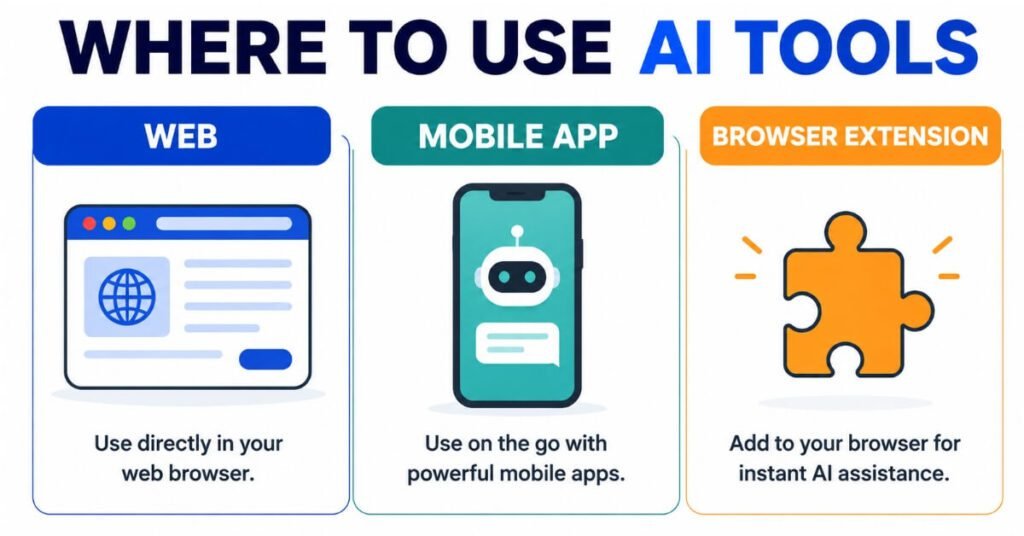
A second useful filter is cost. Nearly every entry in this best AI tools for beginners to try in 2026 list offers a usable free plan, so you can test several options before committing any money. A third filter is platform availability. Some tools work only through a web browser, while others offer mobile apps, browser extensions, or both, which matters if you plan to use them on the go.
Finally, pay attention to how the tool explains itself. A beginner-friendly product usually includes example prompts, short onboarding tutorials, or suggested starting points instead of dropping you into an empty screen and hoping for the best.
Where to Use These Tools: Web, App, or Browser Extension
Another practical factor beginners often overlook is where a tool actually lives. Some of the best AI tools for beginners to try in 2026 work primarily through a web browser, which is fine if you mostly work at a desk, but less convenient if you want quick help on your phone throughout the day. Others offer dedicated mobile apps, letting you draft a message or check a fact while standing in line at the grocery store.
A smaller number integrate directly as browser extensions, quietly working in the background inside whatever website or document you already have open. Thinking about your daily routine before choosing between these formats will help you pick from the best AI tools for beginners to try in 2026 based on how you actually work, not just which tool has the flashiest homepage.
The Best AI Tools for Beginners to Try in 2026
ChatGPT remains one of the easiest entry points for anyone exploring the best AI tools for beginners to try in 2026. Its simple chat interface handles everyday writing, brainstorming, summarizing, and even basic problem-solving without requiring any setup. The free tier is generous enough for regular personal use, and its widespread popularity means there are countless beginner tutorials available if you get stuck.
Google Gemini is another strong pick, particularly for anyone already living inside the Google ecosystem. Because it connects directly to your Gmail, Docs, and Calendar, it can summarize long email threads, draft documents, and even handle voice conversations through Gemini Live. This deep integration makes it one of the more practical options in any list of the best AI tools for beginners to try in 2026, since it fits naturally into tasks you are already doing.
Perplexity AI takes a different approach by functioning as an intelligent research assistant rather than a general chatbot. When you ask it a question, it searches the web in real time and shows you the exact sources behind its answer, which builds trust and makes fact-checking simple. For beginners who want to use AI specifically for research or learning, Perplexity is consistently recommended across nearly every roundup of the best AI tools for beginners to try in 2026.
Grammarly deserves a spot on this list even though many people do not think of it as an “AI tool” in the traditional sense. It works quietly inside your browser or documents, correcting grammar, improving clarity, and adjusting tone as you type. Because it requires zero extra effort to learn, it is often the very first AI-powered tool a complete beginner ever uses without realizing it.
NotebookLM is a slightly different kind of tool built around your own material rather than the open internet. You upload your notes, PDFs, or documents, and it answers questions strictly based on what you provided, making it excellent for students or anyone studying a specific topic. This focus on personal source material makes it a standout entry among the best AI tools for beginners to try in 2026 for anyone in an academic or research-heavy role.
Canva’s AI features round out this list nicely for beginners interested in visual content rather than text. Simple prompts can generate social media graphics, presentation slides, or marketing images without any design experience required. For small business owners or content creators just starting out, this is often the most immediately useful tool on any list of the best AI tools for beginners to try in 2026.
Comparing These Tools at a Glance
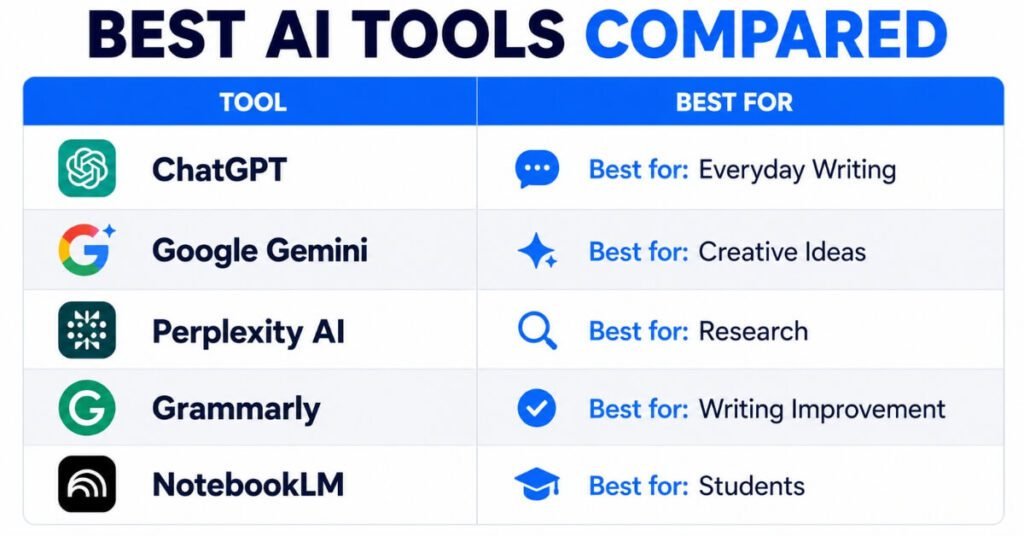
Each of these tools solves a slightly different problem, so thinking about them by use case rather than by brand name will help you choose faster. If your main goal is everyday writing and brainstorming, ChatGPT is the most flexible starting point. If you live inside Google’s apps daily, Gemini will feel more natural because it already has access to your existing files and calendar.
For research-heavy tasks where accuracy and sources matter, Perplexity is the strongest choice among the best AI tools for beginners to try in 2026, since it shows its work instead of just giving you an answer. Grammarly is best treated as a background helper you barely notice rather than a tool you actively open and use. NotebookLM shines specifically when you already have your own documents and want answers grounded only in that material. Canva is the obvious pick the moment your task involves anything visual rather than purely text-based.
Common Mistakes Beginners Make When Starting Out
One frequent mistake is trying to learn five tools at once instead of picking one and actually using it for a week. Spreading your attention too thin makes it hard to build real comfort with any single option. A better approach with any list of the best AI tools for beginners to try in 2026 is to choose one tool that matches your most common task, use it daily for a short period, and only then explore a second option.
Another common mistake is expecting perfect results on the very first try. These tools respond better to clear, specific instructions than vague ones, so beginners often need a few attempts before they get comfortable phrasing requests well. Writing “help me with my email” produces a far weaker result than writing “write a polite follow-up email to a client who has not responded in two weeks.”
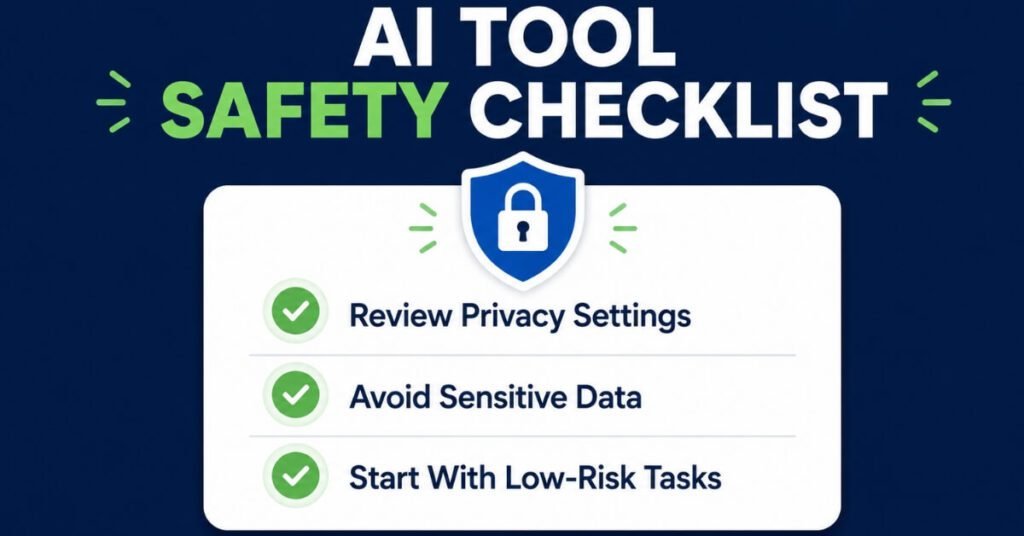
A third mistake is ignoring privacy settings entirely. Many of these tools offer options to control whether your conversations are used for training or saved long term. Reviewing these settings early, rather than after the fact, is a habit every beginner exploring the best AI tools for beginners to try in 2026 should build from day one.
Who Should Wait Before Trying These Tools
Not everyone needs to jump in immediately, and that is perfectly fine. If you are dealing with highly sensitive work involving confidential client data, medical records, or legal documents, it is worth waiting until you fully understand a tool’s privacy policy before using it for that specific purpose, even if it appears elsewhere on a list of the best AI tools for beginners to try in 2026. There is no rush, and starting with lower-stakes, personal tasks first is always the safer path.
Free vs Paid Plans: What Beginners Should Know
Every tool mentioned in this best AI tools for beginners to try in 2026 guide offers a workable free plan, which means you genuinely do not need to spend money to get started. Free plans typically include usage limits, such as a maximum number of messages per day or slightly slower response times during busy periods, but they are more than enough for learning and light personal use.
Paid plans generally unlock higher usage limits, access to more advanced underlying models, and extra features like larger file uploads or priority processing. As a beginner, there is rarely a good reason to upgrade immediately. A smarter approach is to use the free tier for at least a few weeks, notice exactly where you hit limitations, and only then decide whether a paid plan solves a real problem you have actually experienced firsthand.
Tips for Getting More Value From Any AI Tool
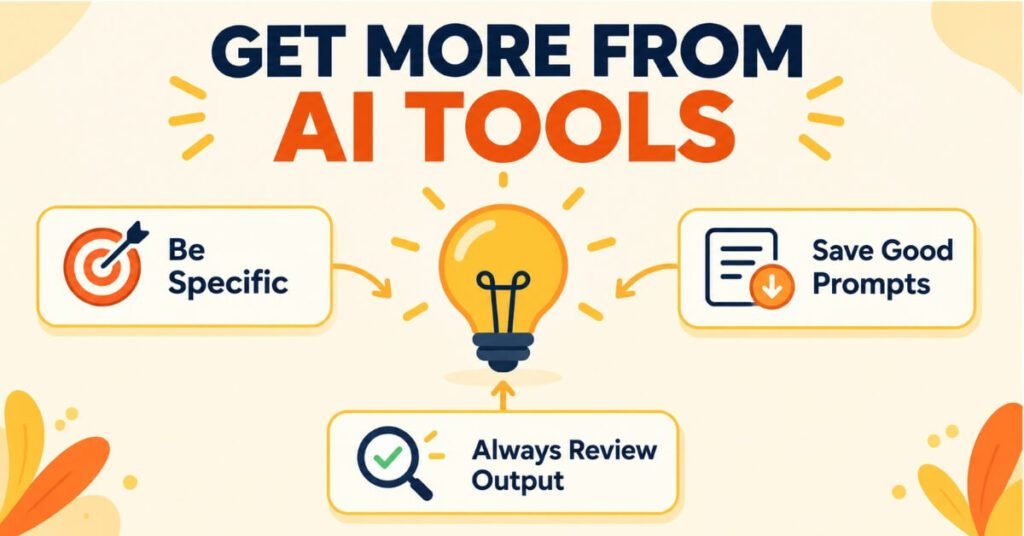
A few small habits make a noticeable difference no matter which option you pick from this list of the best AI tools for beginners to try in 2026. Be specific in your requests, since detailed instructions almost always produce more useful results than short, vague ones. Save prompts that worked well so you can reuse and tweak them later instead of rewriting from scratch every time.
It also helps to treat these tools as a starting draft rather than a finished product. Even the best AI tools for beginners to try in 2026 can make mistakes, misunderstand context, or produce generic output, so reviewing and editing the result yourself will always give you a better final version than accepting the first response blindly.
How These Tools Connect to AI Agents
If you have already read about how AI agents work, you will notice that some of the tools in this best AI tools for beginners to try in 2026 list are beginning to blur that line. Several chat platforms now offer agent-like modes that can complete multi-step tasks rather than answering a single question. Trying these features is a natural next step once you feel comfortable with basic chat-based usage. For a deeper explanation of how that technology works under the hood, our guide on AI agents for beginners explained breaks the concept down without any technical jargon.
According to PCMag’s tested picks for AI chatbots, overall usefulness for everyday users depends less on raw technical power and more on ease of use and reliability, which lines up closely with the beginner-first philosophy behind this entire list.
Frequently Asked Questions
What is the best AI tool for a complete beginner?
ChatGPT is generally the easiest starting point because of its simple interface, generous free tier, and huge number of beginner tutorials available online.
Are these AI tools really free to use?
Yes, every tool mentioned offers a genuinely usable free plan, though most also offer optional paid upgrades for heavier or more advanced use.
Do I need any technical skills to use these tools?
No. Every tool on this list of the best AI tools for beginners to try in 2026 was chosen specifically because it requires no coding or technical background to get started.
Which AI tool is best for students?
NotebookLM is particularly well suited for students because it answers questions based strictly on uploaded notes, textbooks, or PDFs rather than the open internet.
Can I use more than one AI tool at the same time?
Yes, many people eventually use two or three tools for different purposes, such as one for writing and another for research, though beginners should start with just one.
Is it safe to share personal information with these tools?
You should always review each tool’s privacy settings and avoid sharing highly sensitive personal or financial details, since policies on data retention vary between providers.
How do I know when I am ready to try more advanced AI tools?
Once you feel confident using a beginner tool daily without confusion, and you find yourself wanting features it does not offer, that is usually a good sign you are ready to explore more advanced options.
Do these tools work well outside English-speaking countries?
Most of the best AI tools for beginners to try in 2026 support multiple languages reasonably well, though quality can vary, so it is worth testing a tool in your preferred language before relying on it heavily.
What if a tool on this list gets discontinued or changes its pricing?
The AI space moves quickly, so features and pricing can shift. If that happens, the good news is that the underlying skills you build, like writing clear prompts, transfer easily to whichever best AI tools for beginners to try in 2026 you switch to next.
Conclusion
Choosing your first AI tool does not need to be stressful, even with so many new options appearing every month. This guide to the best AI tools for beginners to try in 2026 was built to simplify that decision by focusing only on tools that are genuinely approachable, well-supported by free plans, and useful from the very first session. Start with the one tool that matches your biggest daily task, spend real time with it, and expand from there once you feel confident, since consistency matters far more than trying every option from this best AI tools for beginners to try in 2026 list at once.
The beginners who make the most progress are rarely the ones chasing every new release. They are the ones who pick a solid starting point from a list like this one and actually build a habit around it. If you found this roundup of the best AI tools for beginners to try in 2026 helpful, bookmark it and revisit it whenever you are ready to add a new tool to your toolkit, since new beginner-friendly options are added throughout the year.
Disclaimer
This article is intended for general informational and educational purposes only. It does not constitute professional, technical, or financial advice. Tool names, features, pricing, and free tier limits mentioned here are accurate as of the time of writing but may change without notice. Readers should verify current details directly with each provider before making any decisions. The author and publisher are not responsible for any actions taken based on the information shared in this article.